By James A. Schnur, CCIM
President and Designated Managing Broker
Integrated Real Estate Solutions
LinkedIn
Urban logistics stopped being a “nice to have.” In dense markets, it now drives customer experience, operating cost, and brand trust. Consumers expect fast delivery, accurate tracking, and fewer excuses. Companies respond with new distribution models that move inventory closer to the customer.
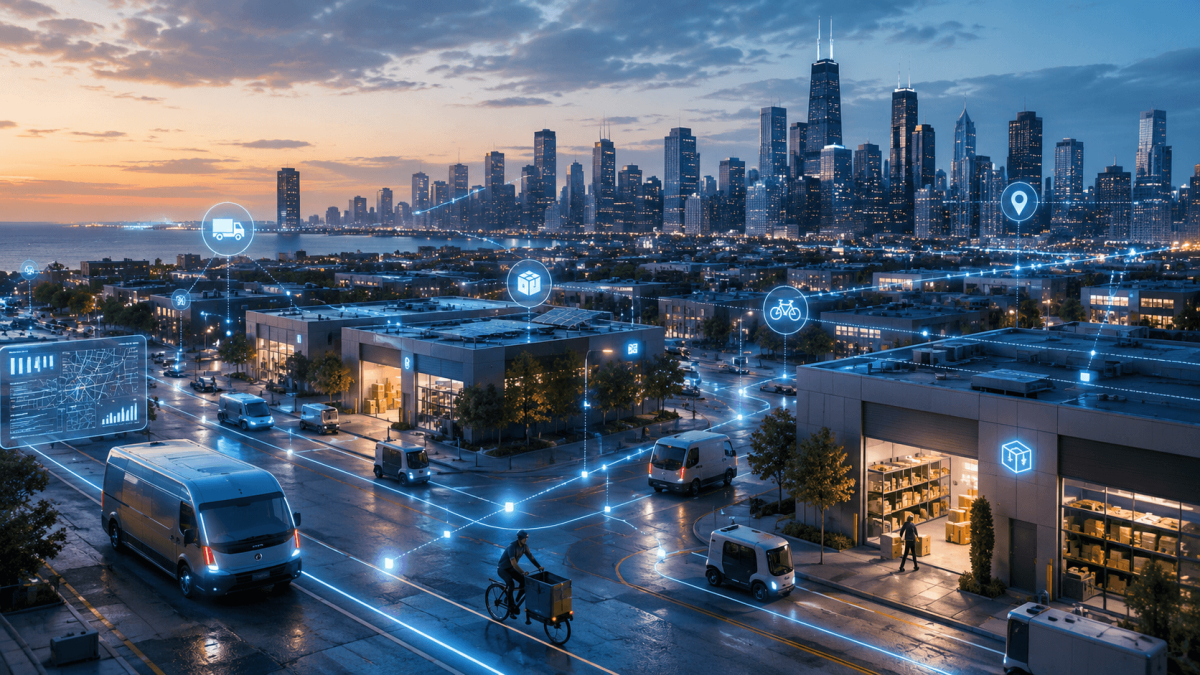
Traditional warehousing still matters, but it no longer carries the whole plan. In 2026, many organizations will build a layered network that includes micro-fulfillment centers, dark stores, and other urban logistics sites designed for speed. The real estate decisions behind that network shape margins as much as transportation does.
Why the last-mile strategy looks different now
The last mile costs the most, creates the most friction, and triggers the most customer complaints. Traffic congestion, limited curb space, and labor shortages turn every late delivery into a brand problem.
At the same time, dense markets rarely offer easy industrial land. When companies chase faster delivery windows, they need solutions that fit within tight urban footprints. That pressure pushes logistics “inward,” closer to population centers, even when the site looks unconventional compared to a classic distribution building.
Micro-fulfillment centers: speed in a compact footprint
A micro-fulfillment center (MFC) is a smaller distribution site that handles high-volume picking close to customers. Many MFCs support grocery, pharmacy, and general retail delivery, where speed and order accuracy matter.
MFCs often use automation or semi-automation to move quickly through high-frequency items. They also reduce delivery distance, which reduces miles, fuel, and late deliveries.
From a real estate perspective, MFCs work best when you align four elements:
- Population density: You need enough demand nearby to justify the site.
- Access: You need routes that reduce travel time, not just maps that look good.
- Operational fit: You need loading, storage, and staging that match the order flow.
- Cost control: Smaller footprints can still carry high rent in prime areas, so the model must earn it.
Many companies place MFCs in infill industrial space. Others adapt underused commercial buildings when zoning and access allow it.
Dark stores: retail without the retail experience
A dark store looks like a store from the outside, but it operates like a fulfillment node inside. Employees pick items for delivery or pickup instead of serving walk-in customers. The model helps retailers use existing footprints in dense neighborhoods where shoppers already live.
Dark stores offer a practical advantage: they bring inventory closer without requiring new industrial construction. They also support fast delivery windows for everyday goods. The operator can treat the site as a “local inventory engine” rather than a customer-facing showroom.
Dark stores also introduce tradeoffs. Neighborhood response can matter, especially if traffic increases. Delivery driver staging needs a plan, not improvisation. The site must support safe and efficient loading, even if the building never had that purpose.
If you evaluate a dark store opportunity, focus on:
- Safe pickup and delivery flow
- Adequate staging and storage space
- Labor access and local operating hours
- Local rules that govern deliveries, signage, and use
Beyond MFCs and dark stores: the 2026 toolkit
Urban logistics keeps evolving. You now see several strategies that push beyond classic warehousing.
Infill distribution nodes: Smaller industrial sites that support quick replenishment into neighborhoods. Many companies use them to feed MFCs or dark stores.
Shared logistics facilities: Operators share space, services, or even delivery capacity. This approach can reduce the cost of entry into dense markets.
Pickup-forward models: Some brands lean into pickup and lockers, which reduce last-mile delivery costs while still offering convenience.
Flexible staging space: Temporary or seasonal space helps companies handle demand spikes without overbuilding permanent capacity.
These options work best when you treat them as a network, not isolated moves. A single site cannot solve last-mile pressure if the rest of the system fights it.
What matters most when you evaluate urban logistics real estate
Urban logistics success comes from disciplined site selection and realistic operating assumptions. We recommend a structured evaluation that includes:
1) Location logic
You want proximity to demand, but you also need usable routes. A site can sit five miles away and still take forty minutes to reach key neighborhoods.
2) Building functionality
Urban logistics depends on flow. The site must support receiving, storage, picking, staging, and outbound movement without chaos. If the building design forces constant workarounds, cost creeps in fast.
3) Curb and access reality
Dense markets run on curb space. If drivers cannot stop safely, load quickly, and exit efficiently, you will pay for delays and disputes.
4) Labor and operating constraints
You need staffing reliability and operating hours that match demand. Local restrictions can limit deliveries or add compliance steps.
5) Total cost, not just rent
A lower rent does not save you if the site creates longer routes, more late deliveries, or higher turnover. Urban logistics decisions require a full-cost view that includes transportation, labor, and service performance.
Why these strategies matter for owners and investors
Urban logistics changes how investors think about risk and durability. Many last-mile uses offer strong demand drivers, especially when they support essential goods and high-frequency delivery patterns. They also bring operational sensitivity. A tenant’s performance relies on access, flow, and local rules more than a conventional warehouse might.
That sensitivity raises the importance of proper evaluation and lease structure. You want clarity around use, operating hours, delivery patterns, and site modifications. You also want confidence that the site will remain functional as expectations evolve.
You should treat urban logistics like a long-term strategy, not a trend. You should define the service area you need to win, choose sites that support real operating flow, and model total cost before you commit. When you align the real estate with the distribution model, you put yourself in a position to deliver faster, operate cleaner, and protect margins in dense markets.
The professionals at Integrated Real Estate Solutions, Inc. offer real estate brokerage and consulting services to help businesses with all aspects of investing in commercial property.
Integrated Real Estate Solutions, Inc. provides clients with the in-depth knowledge and experience that is critical to determine the right path to your next move, lease renewal, or strategic repositioning of your real estate portfolio. Contact us or call 847.550.0160 today about your needs and put our success to work for you.
